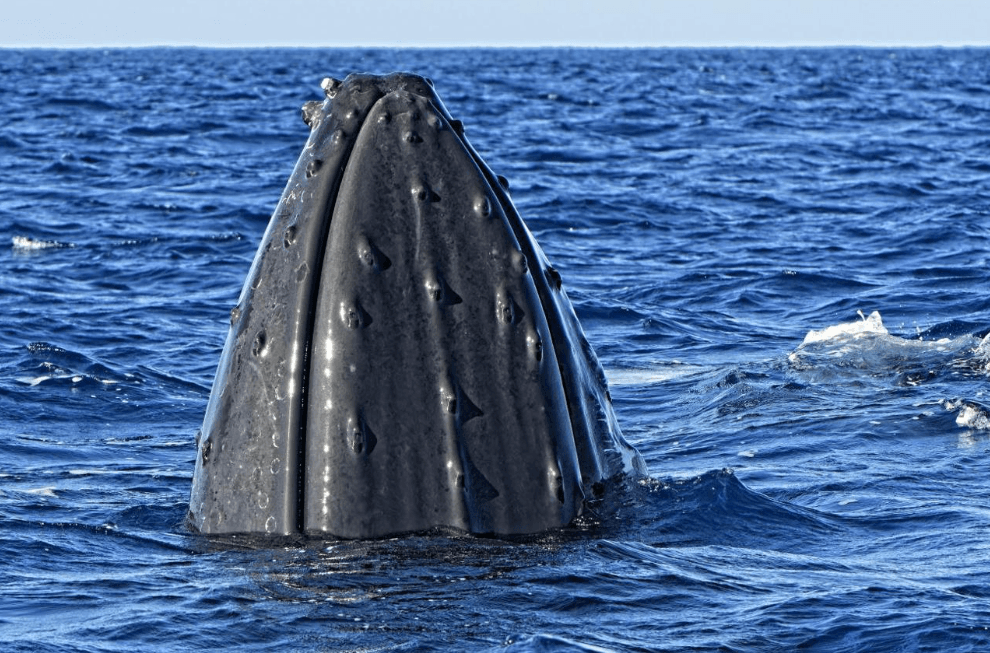
How Do Humpback Whales Communicate Through Body Movements?
A humpback whale does not need to speak to attract attention. A powerful tail slap, a rolling movement at the surface, or a spectacular leap from the water can make its presence known across the ocean.
These visible actions are among the most fascinating parts of humpback whale behavior. When several whales gather in the waters around Samaná, Dominican Republic, their movements can offer clues about social interactions, activity levels, and responses to their surroundings.
But what do these movements actually mean Can people watching from a boat understand whale body language, or are some behaviors still difficult to interpret?
The answer is that scientists can associate certain movements with particular contexts, but a single action rarely tells the whole story. Understanding humpback whale body language requires looking at the movement, the surrounding circumstances, and the behavior of other whales nearby.
What Is Humpback Whale Body Language?
Humpback whale body language refers to the visible movements and postures that may provide information about a whale's activity or interactions with other animals.
These movements include raising or striking the tail, lifting the pectoral fins, rolling at the surface, breaching, and changing body position while swimming.
Some actions occur during social interactions. Others may be associated with movement, feeding, play-like activity, or responses to environmental conditions. Certain behaviors may have more than one possible explanation.
For example, a whale that strikes the water with its tail may be displaying a behavior associated with social activity, but the movement alone does not prove that it is communicating a specific message.
Researchers study whale behavior by observing repeated patterns, recording the circumstances in which movements occur, and comparing observations across individuals and locations.
For visitors, the most useful approach is to notice what a whale does without assuming that every movement has one definite meaning.
Why Do Humpback Whales Make Visible Movements?
Humpback whales live in an environment where sound, body movement, and physical contact can all play roles in their interactions with other animals.
Their large bodies make many movements visible above the surface. A tail strike may create a loud splash, while a breach can lift much of the whale's body into the air.
These actions may serve different purposes depending on the circumstances. Some may be associated with communication or social interactions; others may relate to movement, feeding, or other aspects of behavior.
A movement can also produce several effects at once. For example, a surface strike creates a visual display and a physical disturbance in the water, but observing that disturbance does not reveal precisely what the whale intended.
Scientists therefore distinguish between an observable behavior and an interpretation of its function.
This distinction is especially important for whale watchers. Enjoying a dramatic display is easy; determining why the whale performed it requires much more evidence.
What Does a Tail Slap Mean?
A tail slap occurs when a whale brings its tail flukes forcefully against the surface of the water.
The action can create a substantial splash and may produce a sound that is noticeable from a nearby boat. Depending on the circumstances, tail slapping may occur during social interactions or other periods of activity.
Researchers may consider several details when interpreting the behavior:
- Whether one whale or several whales are involved.
- Whether the movement is repeated.
- Whether the whale is traveling, resting, or interacting with another whale.
- Whether other visible behaviors occur before or after the slap.
A single tail slap does not automatically mean that a whale is angry, warning another animal, or trying to communicate with people.
The context matters. Repeated observations can help researchers identify patterns, but even an experienced observer may not be able to determine the precise purpose of an individual movement.
During a whale-watching trip in Samaná, a tail slap is an exciting behavior to witness. It is also a reminder that whale behavior should be interpreted carefully rather than translated into a simple human emotion.
Why Do Humpback Whales Raise Their Pectoral Fins?
Humpback whales have exceptionally long pectoral fins on either side of their bodies. These fins help distinguish them from many other whale species.
At the surface, a humpback whale may lift a fin, roll onto its side, or expose one or both fins above the water.
Such movements may occur during social activity or other surface behaviors. However, the purpose can vary, and a raised fin does not always indicate a deliberate message to another whale.
The whale's position can also change how the movement appears to observers. A fin that looks like a wave from a boat may simply be part of a roll or another movement through the water.
When watching humpback whales, notice whether the fin movement happens alone or as part of a sequence. Does the whale roll before lifting the fin Does another whale respond Are the animals traveling together?
These observations make the experience more engaging, while still leaving room for uncertainty about the behavior's exact function.
What Can a Breach Tell Us About Whale Behavior?
Breaching is one of the most recognizable humpback whale behaviors. It occurs when a whale launches part or much of its body out of the water before falling back onto the surface.
A breach may create a towering splash, making the action visible from a considerable distance under suitable conditions.
Scientists have proposed several possible functions for breaching and other energetic surface behaviors. These include social signaling, interactions with other whales, and other physical or behavioral purposes. The relative importance of these explanations can vary with context.
It is not possible to determine the exact reason for every breach simply by watching it.
For example, a whale breaching near other whales may be involved in a social interaction, but proximity alone does not prove that the breach was directed at a particular animal.
Breaching may also occur when no clear social target is visible to observers.
If you see a breach in Samaná, enjoy the moment and pay attention to what happens afterward. Does the whale repeat the action, change direction, or disappear beneath the surface These details can help describe the sequence, even if the whale's motivation remains uncertain.
Can Humpback Whales Communicate by Rolling at the Surface?
Humpback whales sometimes roll, rotate, or change their orientation near the water's surface.
Rolling can expose different parts of the body, including the belly, pectoral fins, and sides. It may occur alongside other surface movements, particularly when whales are close together.
The movement itself does not have one universal meaning. Depending on the situation, it may be associated with social interaction or another activity.
Observers should also consider that a whale's body position changes naturally as it swims and surfaces to breathe. Not every roll is a deliberate display.
A useful way to observe this behavior is to look at the whole sequence rather than one isolated movement. The direction of travel, the presence of nearby whales, and any repeated actions can provide context.
From a boat, it can be difficult to see what happens beneath the surface. That limitation means some explanations will remain uncertain even when the surface movements are clear.
Do Humpback Whales Use Their Movements to Interact With Other Whales?
Yes, body movements can be part of humpback whale social behavior, although the meaning of an individual movement may not always be clear.
Humpback whales sometimes travel in groups or gather in situations associated with breeding and other social activities. Their visible actions can include changes in position, fin movements, tail strikes, and energetic surface displays.
In some contexts, researchers observe patterns of behavior that help them understand how whales interact. For instance, repeated movements occurring during close encounters may provide clues about the nature of an interaction.
However, not every gathering is a stable social group, and not every movement is a direct signal to another whale.
Whales may approach, separate, change direction, or move independently. A brief observation rarely reveals the full history of their relationship.
For visitors in Samaná, this uncertainty is part of observing wild animals. Watching the interactions without assigning unsupported meanings allows people to appreciate the whales as complex marine mammals rather than characters following a predictable script.
How Is Body Language Different From Whale Vocalization?
Humpback whales use both visible behavior and sound, but these are different forms of observation.
Body movements can be seen when a whale is near enough to the surface and the conditions allow a clear view. Vocalizations are produced underwater and may be detected using appropriate listening equipment.
Humpback whale sounds include a range of calls and, in some contexts, complex songs. Researchers investigate how these sounds relate to communication, social behavior, and other activities.
A tail slap may produce a sound as well as a visible splash, but it should not be confused with the vocal sounds whales produce underwater.
Likewise, observing a whale moving near another whale does not prove that it is making a particular call.
The two types of behavior can complement one another in scientific research. Studying sounds alongside movements and social context can help researchers develop a more complete understanding of whale behavior.
For whale watchers, the key difference is simple: visible movements are one source of information, while underwater vocalizations require different methods of observation.
Can Visitors Tell Whether a Humpback Whale Is Happy or Angry?
It is tempting to interpret a whale's movements using familiar human emotions. A breach may look joyful, while a forceful tail slap may appear angry.
However, these interpretations go beyond what the movement alone can establish.
Scientists can describe observable behavior and investigate the circumstances in which it occurs. They may also study evidence relevant to animal emotion and cognition, but assigning a specific emotional state to a wild whale from a brief surface display is difficult.
A whale that strikes the water repeatedly should not automatically be described as angry. Similarly, a whale that breaches should not automatically be described as happy or playful.
More accurate descriptions focus on what is visible: the whale breached, slapped its tail, rolled, or changed direction.
This approach does not make whale watching less interesting. Instead, it encourages visitors to observe more carefully and appreciate the difference between evidence and interpretation.
What Should You Watch for During a Samaná Whale-Watching Trip?
Samaná is known for seasonal humpback whale watching in the Dominican Republic. During the regional breeding season, visitors may have opportunities to observe whales surfacing, moving through the water, and interacting with other animals.
If you want to learn about body language during an excursion, pay attention to several details.
First, observe the sequence. A single movement provides limited information. Notice whether the whale repeats it or follows it with another action.
Second, look at the wider scene. Are other whales nearby Is the animal traveling alone or moving alongside another whale The surrounding circumstances can help describe the behavior.
Third, distinguish what you see from what you infer. You can confidently record that a whale lifted its fin or struck the surface. You may not be able to identify the exact reason.
Fourth, listen to your guide. A knowledgeable guide may explain common behaviors and the limits of interpreting them. The best explanations acknowledge uncertainty rather than promising to decode every action.
Finally, remember that whales choose how and when to surface. No tour can guarantee a breach, tail slap, or particular social display.
How to Photograph Whale Movements Responsibly
Photographing surface behavior can be rewarding, particularly when a movement happens quickly. A little preparation can help you capture the moment without compromising safety.
Use a camera setting that can handle movement, and keep your equipment ready when whales are visible. If your camera supports continuous shooting, it may help record a short sequence rather than a single frame.
Avoid leaning dangerously over the side of the boat while trying to follow a whale through the viewfinder. Keep your attention on the crew's instructions and the boat's movement.
Do not encourage a captain to approach too closely in pursuit of a better photograph. Responsible wildlife viewing requires allowing the animals to move naturally and following applicable local regulations.
A photograph also has limits. It can document a visible movement, but it cannot necessarily reveal why the whale performed it.
If you publish whale photographs online, use captions that describe what is actually visible. This helps readers learn about whale behavior without mistaking speculation for scientific fact.
Why Understanding Whale Body Language Matters
Learning about humpback whale movements can make a whale-watching trip more educational. Instead of waiting only for a spectacular breach, visitors can pay attention to the many smaller movements that occur throughout an encounter.
It also encourages respect for the animals. When people recognize that a whale's behavior may have several explanations, they are less likely to treat wildlife as a performance that should happen on demand.
Scientific curiosity and responsible tourism work well together. Both involve careful observation, patience, and an appreciation of what is not yet known.
Humpback whales remain fascinating because their lives cannot be reduced to a short list of simple signals. Each encounter offers an opportunity to observe a wild animal while recognizing that much of its behavior takes place beyond our view.
Plan Your Samaná Whale-Watching Experience
If you would like to observe humpback whales in their natural environment, consider a whale-watching excursion in Samaná during the regional season.
Before booking, verify the operator's current departure location, operating dates, trip duration, transportation arrangements, included services, and cancellation policy. These details vary by provider.
Choose a tour that follows applicable wildlife-viewing rules and prioritizes passenger safety. Keep in mind that the whales' behavior is unpredictable, and particular displays cannot be promised.
Explore available Samaná whale-watching excursions and prepare for a trip focused on observing and learning about marine wildlife. Whether you see a tail slap, a rolling movement, or simply a whale surfacing for air, every encounter can offer something worth noticing.
Frequently Asked Questions
1. How do humpback whales communicate through body movements?
Humpback whales perform visible actions such as tail slaps, breaches, fin movements, and rolls. These behaviors can occur in social contexts, but the exact meaning of an individual movement depends on the circumstances and may remain uncertain.
2. Does a tail slap mean a humpback whale is angry?
Not necessarily. Tail slapping has been observed in different behavioral contexts. A single tail slap is not enough to establish that a whale is angry or directing a warning at another animal.
3. Why do humpback whales breach?
Breaching may be associated with social interactions, signaling, and other behavioral or physical purposes. Scientists continue to investigate the factors that influence this behavior, and there is no single explanation for every breach.
4. Do humpback whales use their fins to communicate?
Fin movements may occur during social interactions and other surface behaviors. However, a raised or exposed fin does not always represent a deliberate signal, so its function should be interpreted in context.
5. Is whale body language the same as whale singing?
No. Body language refers to visible movements and postures, while whale singing involves underwater vocalizations. Researchers can study both to learn more about humpback whale behavior.
6. Can tourists understand every whale movement?
No. Visitors can observe and describe visible actions, but identifying the exact purpose of each movement often requires additional evidence. Even researchers may not be able to determine the meaning of an isolated behavior.
7. Can I see humpback whale body movements in Samaná?
Visitors may observe surface movements during the regional whale-watching season. What happens during an individual trip depends on the whales' natural behavior, sea conditions, and viewing circumstances.
8. What is the best way to observe whale behavior responsibly?
Remain in the designated passenger area, follow the crew's instructions, and choose an operator that respects applicable wildlife-viewing regulations. Never try to touch, chase, feed, or enter the water to approach wild whales.
Conclusion
Humpback whales use a variety of visible movements, including tail slaps, fin displays, rolling, and breaching. These actions can provide clues about their activities and interactions, but their exact meaning is not always obvious.
During whale watching in Samaná, observing the full sequence of behavior is more informative than interpreting one movement in isolation. With patience and a responsible approach, visitors can enjoy these remarkable animals while learning to distinguish scientific evidence from assumptions about what a whale may be communicating.

Local explorer & expert guide in Samaná Bay Whale Watching.