Why Do Humpback Whales Migrate to Samaná Bay?
Every year, humpback whales make an extraordinary journey across the Atlantic Ocean, traveling from colder northern waters toward the warm Caribbean. One of their important seasonal destinations is Samaná Bay in the Dominican Republic, where these enormous marine mammals gather to mate, reproduce, and raise their newborn calves.
But why do humpback whales travel such long distances Why do they leave feeding grounds filled with food, and what makes Samaná an important part of their annual journey?
Understanding the reasons behind this migration makes a whale-watching trip more meaningful. Instead of simply looking for whales at the ocean's surface, visitors can appreciate the remarkable life cycle and natural instincts behind their seasonal arrival.
Where Do Humpback Whales Come From?
Many humpback whales visiting Samaná belong to the North Atlantic population. During the warmer months, they spend time in productive northern waters, including areas near the northeastern United States, eastern Canada, Greenland, and other North Atlantic feeding grounds.
These colder waters can support abundant food, including krill and small schooling fish. Humpback whales build up energy reserves during their feeding season, helping them prepare for the long journey to their tropical breeding grounds.
As the seasons change, many whales migrate south toward the Caribbean. The wider region provides important habitat for courtship, mating, and calving.
Samaná Bay is one of the locations where people can observe this seasonal movement. However, not every humpback whale follows an identical route, and the bay is only one part of the wider Caribbean breeding region.
1. Warm Water Provides Important Breeding Habitat
One of the main reasons humpback whales migrate to tropical waters is reproduction.
Warm Caribbean waters offer conditions that are different from the colder environments where many humpbacks feed. These tropical areas are important for reproductive activities, including courtship and mating.
Humpback whales are adapted to travel between these distinct environments. Their annual migration allows them to take advantage of productive northern feeding grounds while using warmer waters for a different stage of their life cycle.
Samaná Bay is particularly recognized for its seasonal gatherings of humpback whales. During the migration period, visitors may see whales traveling through the bay, surfacing, or displaying behaviors associated with social interaction.
The whales are not simply visiting a scenic destination. They are using an important part of their natural habitat.
2. The Caribbean Is an Important Place for Newborn Calves
Female humpback whales also travel to Caribbean breeding areas to give birth.
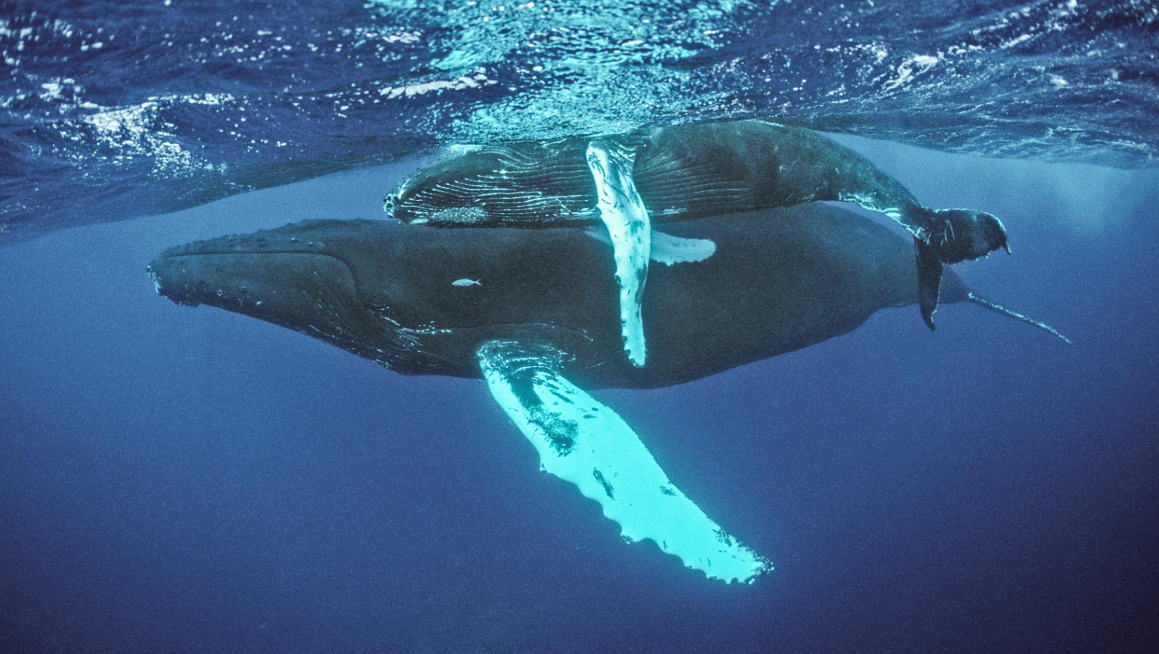
A newborn calf enters a world where staying close to its mother is essential. The mother provides milk, protection, and guidance while the calf develops the strength and coordination it needs for life in the ocean.
Warm tropical waters are generally favored by humpbacks for calving. These environments differ from the colder northern feeding grounds and provide important conditions for the early stages of a calf's life.
Samaná Bay and the surrounding Dominican waters are associated with this reproductive cycle. Depending on the time and location, whale watchers may encounter a mother and calf swimming near one another.
Such encounters can be memorable, but sightings are never guaranteed. Whale activity varies naturally, and visitors should observe animals from a respectful distance.
3. Humpback Whales Follow a Seasonal Feeding and Breeding Cycle
The migration of humpback whales is closely linked to the changing seasons.
During spring, summer, and fall, many North Atlantic humpbacks spend time feeding in colder, food-rich waters. They consume prey and accumulate energy reserves that help sustain them during migration and their time on breeding grounds.
In tropical breeding areas, humpbacks generally feed little or not at all compared with their feeding-season behavior. Their stored energy helps support the demands of migration and reproduction.
This difference explains why the whales move between two very different environments rather than remaining in one location throughout the year.
Northern feeding groundsCaribbean breeding groundsColder, productive watersWarmer tropical watersFood gathering and energy storageCourtship, mating, and calvingFeeding on prey such as krill and small fishLittle or no feeding for many whalesMainly spring through fall for many North Atlantic groupsMainly winter
The timing can vary depending on the individual whale and its location. The table describes the broad seasonal pattern, not a fixed schedule followed by every whale.
4. How Far Do Humpback Whales Travel?
Humpback whales are capable of traveling thousands of miles during seasonal migrations. NOAA Fisheries explains that some humpbacks migrate approximately 5,000 miles between high-latitude feeding grounds and tropical breeding areas.
For North Atlantic whales, the route can connect feeding areas near the United States, Canada, and Greenland with breeding waters in the Caribbean.
These long journeys require energy, endurance, and the ability to navigate through changing ocean environments. Scientists continue to study whale movements using photographs, observation records, acoustic research, and other scientific methods.
It is important to remember that the distance depends on the whale's starting point. A whale arriving in Samaná from one feeding region may travel a different distance from a whale coming from another part of the North Atlantic.
The scale of this migration is one reason humpback whales attract so much interest from researchers and nature travelers.
5. Why Is Samaná Bay Important?
Samaná Bay lies in the northeastern Dominican Republic and is part of a wider marine environment used by humpback whales during their seasonal migration.
Its importance is connected to the broader Dominican Marine Mammal Sanctuary, which protects significant marine habitats, including areas used by humpbacks for reproduction.
Several features make Samaná a recognized destination for whale watching:
- Seasonal whale activity: Humpbacks return to the wider region during the winter breeding period.
- Opportunities to observe natural behavior: Visitors may see surfacing, tail movements, breaching, or social interactions.
- Educational value: Whale-watching excursions can introduce visitors to marine migration, reproduction, and conservation.
- Conservation importance: Protecting the whales' habitat helps support their continued use of the region.
Samaná is not the only breeding area in the Caribbean. The wider Dominican region, including offshore banks, is also important to North Atlantic humpbacks.
For more background, visit NOAA Fisheries' humpback whale information and the official Dominican Republic tourism guide to the Marine Mammal Sanctuary.
6. What Can Visitors See During the Migration?
Whale watching offers a chance to observe some of the behaviors associated with humpback whales in their natural environment.
Depending on the day, sea conditions, and the animals' activity, visitors may see:
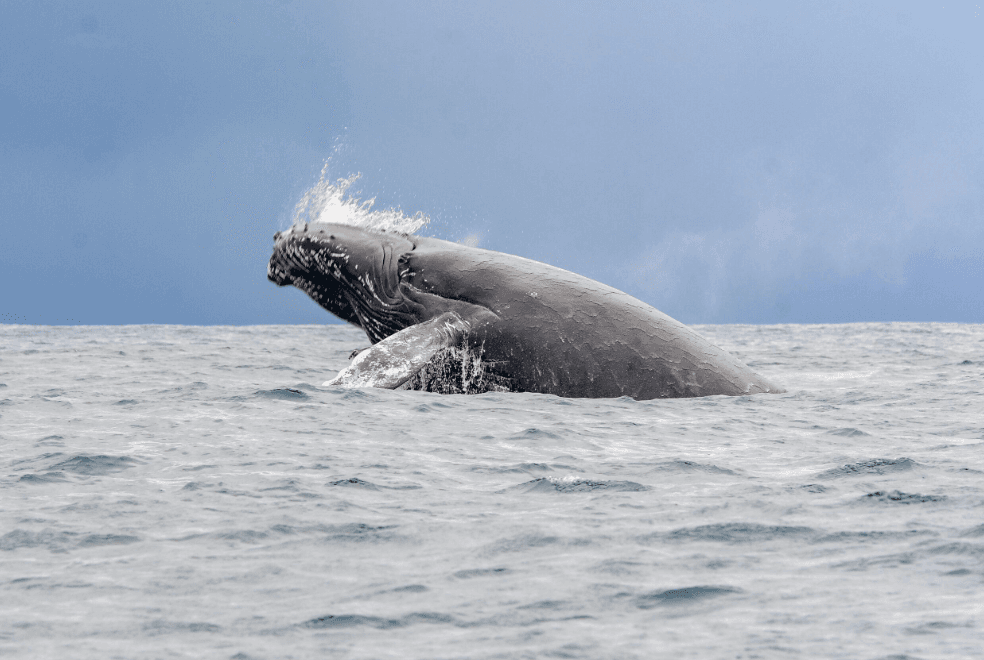
Breaching: A whale launches part or much of its body out of the water before landing with a splash.
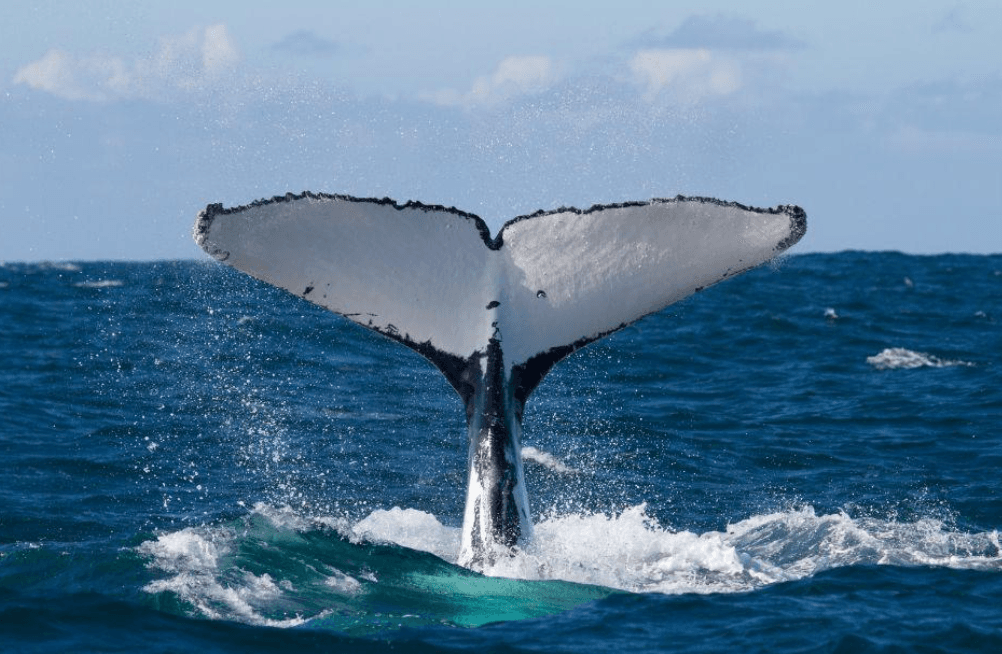
Tail slapping: A whale raises its tail flukes and strikes the water. Researchers study this and other surface behaviors, although the meaning can vary by context.
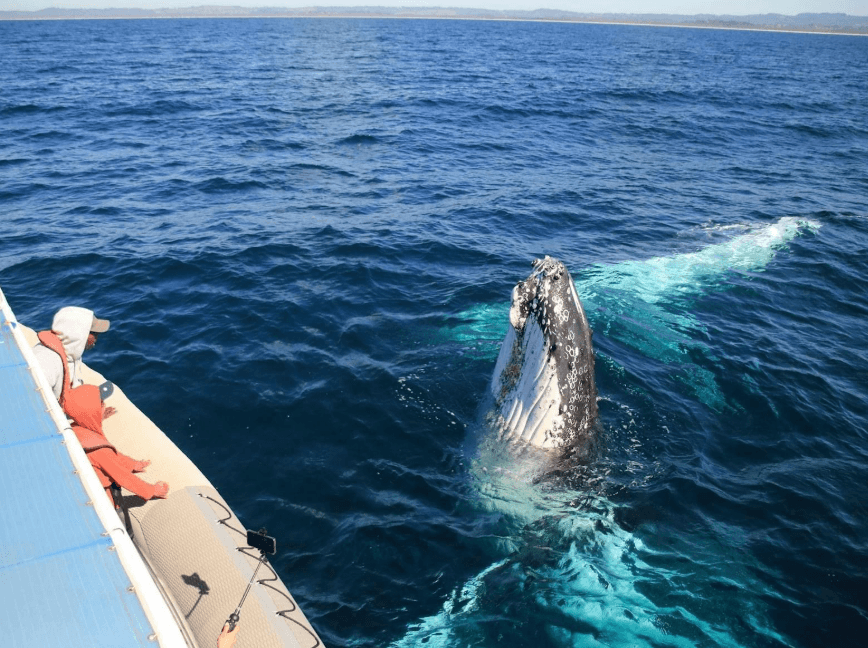
Surfacing and breathing: Humpbacks regularly come to the surface to breathe through their blowholes.
Mother-and-calf behavior: A calf may swim close to its mother, surfacing alongside her as it develops.
Social interactions: Whales may travel in groups or display behaviors associated with courtship and competition.
There is no guaranteed sequence of events during an excursion. Whales are wild animals, and a trip may involve long periods of searching between sightings.
A good experience is about learning and observing responsibly, not expecting the whales to perform on demand.
7. When Do Humpback Whales Arrive in Samaná?
Humpback whales visit the waters around Samaná primarily during the winter breeding season. The official Dominican Republic tourism resource lists the usual whale-watching season as January 15 through March 30, although official dates and operating arrangements should always be checked for the year of travel.
Some whales may arrive before the busiest viewing period, while others may remain later. Their movement is influenced by natural seasonal patterns, and individual animals do not all arrive or depart on the same day.
If you are planning a trip, check current guidance from the Dominican Republic's environmental authorities and confirm the excursion dates with an authorized local operator.
For further planning, read our related guide to the best time of day for whale watching in Samaná and our article on how weather and sea conditions affect whale-watching trips.
8. How Can Whale Watching Support Conservation?
Whale migration depends on healthy ocean environments across a very large area. Protecting whales in Samaná is important, but their survival also depends on conditions along their migration routes and in their northern feeding grounds.
Visitors can help by choosing responsible whale-watching operators and following the rules provided by guides and authorities.
Before booking, ask whether the operator follows local whale-watching regulations, maintains appropriate distances, and avoids pressuring whales for closer encounters.
During a trip:
- Follow the crew's instructions.
- Do not attempt to touch, feed, or swim with the whales.
- Avoid loud or disruptive behavior.
- Never pressure a captain to approach closer for a photograph.
- Follow current rules concerning drones, wildlife distances, and boat operations.
Responsible whale watching can help visitors understand why these animals and their habitats deserve protection.
Frequently Asked Questions
Why do humpback whales migrate to Samaná?
They travel to the Caribbean as part of their seasonal reproductive cycle. The wider region provides important habitat for courtship, mating, and giving birth.
Do humpback whales travel to Samaná to eat?
Generally, no. Many North Atlantic humpbacks feed in colder, productive waters during spring, summer, and fall. In tropical breeding areas, they usually feed little or not at all.
Do all humpback whales visit Samaná Bay?
No. Samaná is one of several areas used by North Atlantic humpbacks in the wider Caribbean breeding region. Individual routes and destinations vary.
Can visitors see baby humpback whales in Samaná?
It is possible to see mother-and-calf pairs during the breeding season, but sightings depend on the animals' movements and cannot be guaranteed.
What is the best time to visit for whale watching?
The usual visitor season is during the winter months, commonly from January 15 through March 30 under published Dominican Republic tourism guidance. Check current local regulations and tour arrangements before traveling.
How can I help protect migrating humpback whales?
Choose responsible operators, respect wildlife-viewing rules, keep a safe distance, and support conservation efforts that protect marine habitats.
Final Thoughts
The migration of humpback whales to Samaná Bay is part of a remarkable natural cycle connecting cold North Atlantic feeding grounds with warm Caribbean breeding waters.
These whales make long journeys to reproduce, give birth, and raise their calves in important tropical habitats. Their return each winter offers visitors a chance to witness a small part of a much larger story—one that stretches across the Atlantic and depends on healthy marine environments.
By learning why humpbacks migrate and choosing responsible whale-watching experiences, travelers can leave Samaná with more than photographs. They can leave with a better understanding of the animals, their life cycle, and the importance of protecting the ocean they depend on.
Plan your visit thoughtfully, observe wildlife respectfully, and remember that every whale encounter takes place on the animals' terms.

Local explorer & expert guide in Samaná Bay Whale Watching.