Why Do Humpback Whales Have Such Long Pectoral Fins?
Humpback whales are famous for their spectacular breaches, powerful tail movements, and unusually long pectoral fins. These broad, wing-like flippers are among the most distinctive features of the species and help distinguish humpbacks from many other large whales.
When a humpback whale surfaces in Samaná Bay, Dominican Republic, visitors may occasionally see one of these fins lifted above the water. Underwater, the same structure plays a role in how the whale moves and maneuvers through its environment.
But why are humpback whale pectoral fins so long Do they help the whale steer, maintain balance, or swim faster?
Humpback whales have exceptionally long pectoral fins that help with maneuverability, control, and movement through the water. Their shape and flexibility distinguish them from the flippers of many other whale species, although the precise contribution of each fin movement depends on how the whale is swimming.
This guide explains the anatomy of humpback whale pectoral fins, how they function, and why these unusual structures are important to the animal's underwater movements.
What Are Humpback Whale Pectoral Fins?
Pectoral fins are the paired appendages located on either side of a whale's body, roughly corresponding to the forelimbs of other mammals.
In humpback whales, these appendages are exceptionally long relative to body size. Their length is one of the species' most recognizable anatomical features.
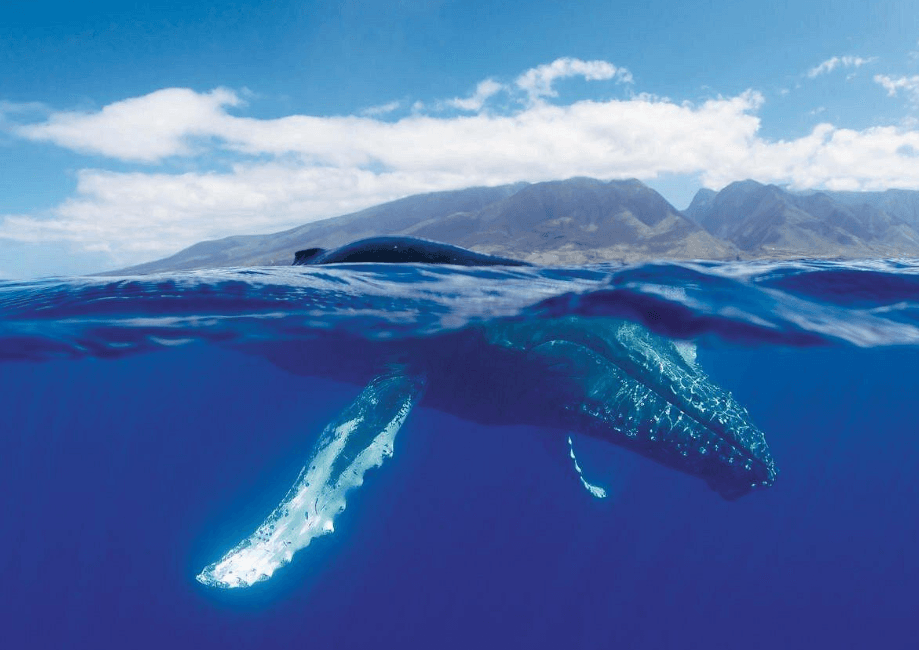
Although they are often called flippers, humpback whale pectoral fins are not simply paddles attached to the body. They contain an internal skeletal structure, muscles, connective tissues, and a surface shape that interacts with moving water.
Together, these features allow the fins to influence the whale's motion.
A distinctive shape
Humpback whale pectoral fins are long and relatively broad. Their shape differs from the shorter pectoral fins of many other whale species.
The outer edges may also have irregular bumps called tubercles. These rounded structures along the leading edge are a characteristic feature of humpback whale flippers.
Their form has attracted scientific interest because the fin's shape affects how water moves around it.
Built from an underlying skeleton
Whale pectoral fins contain modified forelimb bones. Their internal arrangement reflects the evolutionary history of whales as mammals whose ancestors lived on land.
The bones are covered by tissues that form the external fin, producing an appendage adapted for life in water.
The fin's skeleton supports its shape, while muscles and other tissues help control its position and movement.
How Do Long Pectoral Fins Help Humpback Whales Turn?
One important function of pectoral fins is maneuvering.
A large whale needs to adjust its orientation while swimming through a three-dimensional environment. It may change direction, alter its body angle, or move its fins to control its motion.
The long pectoral fins provide surfaces that interact with the surrounding water, allowing the whale to influence forces acting on its body.
Adjusting direction
When a whale changes the angle or position of a pectoral fin, it changes how water flows around that fin. The resulting forces can contribute to turning and maneuvering.
The two fins do not always need to move identically. Different positions can affect the forces acting on either side of the body.
However, a turn involves the whole animal. The body, tail flukes, and pectoral fins work together, so it would be inaccurate to attribute every change in direction to the fins alone.
Controlling body movement
Pectoral fins can also contribute to controlling body orientation while the whale moves.
A whale may adjust its fins while banking or changing its swimming direction. The amount of control provided depends on the animal's speed, fin position, and surrounding water conditions.
For a large marine mammal, maneuverability is important because the ocean is not a straight, empty corridor. Whales move through changing water conditions and interact with other animals and features of their environment.
Do Humpback Whale Fins Help Them Swim Faster?
Pectoral fins influence the way water flows around a whale, but their main role should not be confused with the primary source of forward propulsion.
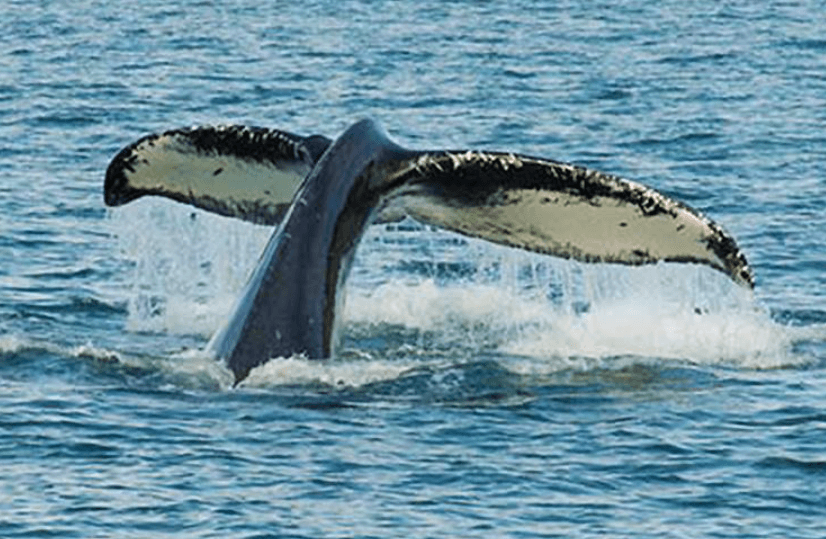
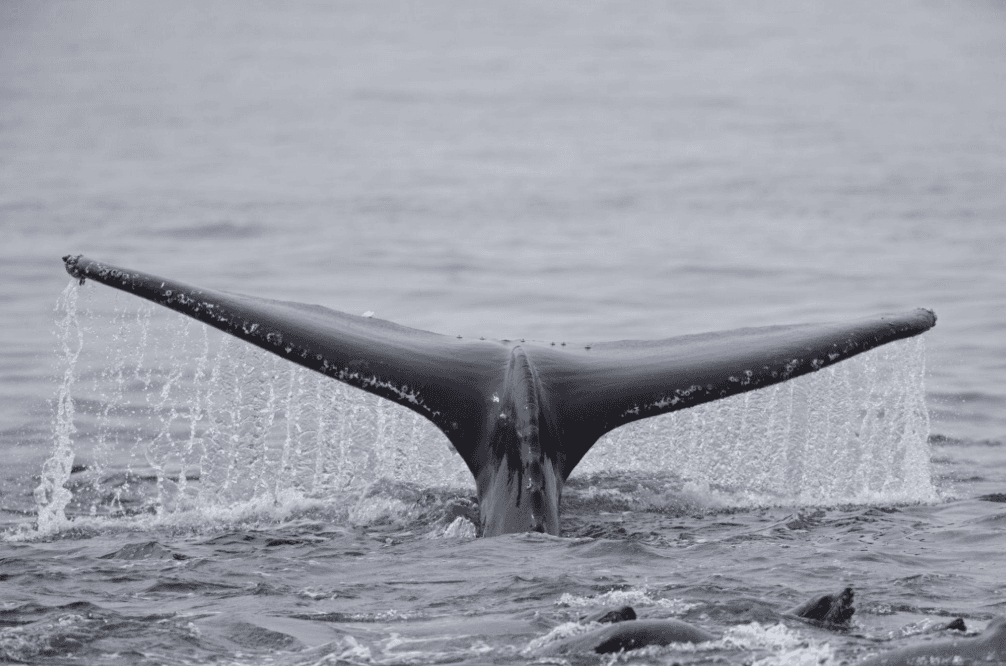
Humpback whales generate most of their forward thrust through vertical movements of their powerful tail flukes. The pectoral fins contribute to maneuvering, stability, and control.
The interaction between these structures allows the whale to combine forward movement with changes in orientation.
The role of the tail
When the tail flukes move up and down, they push against the water and generate thrust.
The whale's body transfers this motion through the water, while the pectoral fins help influence its direction and orientation.
These functions complement one another rather than competing.
Why fin shape still matters
Although the fins are not the main propulsion system, their shape influences the forces generated as water flows around them.
A long, broad fin provides a substantial surface that can be repositioned to affect movement.
The relationship between fin geometry and movement is complex, so fin length alone does not determine how fast a whale can swim.
What Are the Bumps on Humpback Whale Fins?
One of the unusual features of humpback whale pectoral fins is the presence of rounded bumps along their leading edges. These are known as tubercles.
They are part of the fin's natural anatomy and can be visible in photographs of the leading edge.
How tubercles affect water flow
The bumps influence the way water moves around the fin. Research on tubercled surfaces has investigated how these structures affect lift, flow separation, and maneuverability.
The results depend on the fin's shape, angle, movement, and the conditions under which it operates.
It is important not to reduce the science to a simple claim that tubercles always make a whale faster or more efficient. Their effects depend on the full hydrodynamic system.
Why scientists study these structures
Humpback whale flippers have inspired research into how natural shapes interact with moving fluids.
Engineers and researchers have investigated tubercle-inspired designs for certain types of blades, wings, and other surfaces.
However, a biological fin and a manufactured device do not behave identically under every condition. Findings from one system must be tested before being applied to another.
The scientific interest lies in understanding how a distinctive natural structure influences fluid movement, not in assuming that every design inspired by a whale will automatically perform better.
Why Do Humpback Whales Sometimes Lift a Pectoral Fin Above the Water?
During whale-watching trips, a humpback whale may lift a pectoral fin out of the water or hold it near the surface.
This behavior can be visually striking, particularly when the lighter underside of a fin is visible against the sea.
However, seeing a fin raised does not automatically reveal why the whale is doing it.
The movement may occur as part of a broader body movement, a roll, a change in orientation, or another behavior. Without additional context, an observer cannot confidently assign one purpose to every fin lift.
A visible part of a larger movement
A whale may move its pectoral fins while adjusting its position in the water. Depending on the angle and movement, one fin may become visible above the surface.
The rest of the animal may remain underwater, making it difficult to interpret the full movement from a boat.
Avoiding assumptions about communication
People sometimes wonder whether a raised fin is a signal to other whales or a deliberate gesture toward observers.
A single observation is not enough to establish that interpretation. Researchers need repeated observations and suitable evidence to distinguish a particular communication function from other explanations.
For visitors, the most reliable approach is to describe the visible behavior and appreciate the fin's structure without assuming a specific intention.
Are Humpback Whale Pectoral Fins Used for Balance?
Pectoral fins contribute to controlling the whale's movement and orientation in the water. In that broad sense, they help the animal maintain control while swimming.
However, the word balance can oversimplify the mechanics involved.
A whale is supported by water and moves through a fluid environment. Its stability and orientation depend on several interacting factors, including body shape, swimming speed, tail movement, and the position of its fins.
When a whale changes its fin position, it can influence the forces acting on the body. This contributes to the control needed for maneuvering.
Rather than acting as simple balancing rods, the fins form part of an integrated system that allows the whale to move through the water.
How Do Humpback Whale Fins Compare with Those of Other Whales?
Different whale species have different body shapes and fin proportions. These differences reflect their evolutionary history and the demands of their movement and feeding strategies.
Humpback whales are particularly notable for their long pectoral fins.
Other large whales may have shorter or differently shaped pectoral fins, depending on the species. Such differences do not mean that one design is universally superior.
Each species has a body structure suited to its ecological needs, movement patterns, and evolutionary history.
Why humpbacks stand out
The combination of long fins, broad surfaces, and tubercles gives humpback whales a distinctive appearance.
These characteristics make the species recognizable in photographs and can help observers distinguish it from other whales.
Different shapes, different functions
Comparisons between species help researchers investigate how body structures relate to swimming and behavior.
But anatomy must be interpreted in context. Fin shape interacts with body size, swimming style, and other physical features, so it is rarely possible to explain a species' movement through one anatomical feature alone.
What Can Whale Watchers Observe in Samaná?
Samaná is known for seasonal visits by North Atlantic humpback whales. During the whale-watching season, visitors may see different parts of a whale's body as it surfaces and moves through the water.
A pectoral fin may be visible when a whale lifts it above the surface, rolls, or swims at an angle that exposes the fin.
Not every trip will include this behavior. Whales are wild animals, and their movements vary between encounters.
If you do see a pectoral fin, notice its length relative to the body and any visible differences between its upper and lower surfaces. These details can help you appreciate the whale's anatomy.
Avoid assuming that a raised fin necessarily means the whale is waving, signaling, or attempting to interact with the boat. Responsible observation distinguishes what can be seen from what remains uncertain.
Why Understanding Whale Anatomy Makes Sightings More Meaningful
Learning about pectoral fins can help visitors appreciate humpback whales beyond their size and spectacular surface displays.
The fins are not merely decorative features. They are specialized structures that contribute to movement and control, while the tail flukes provide most of the forward thrust.
Their shape also provides an example of how evolution can produce distinctive anatomical features that attract scientific attention.
When visitors understand the relationship between a whale's fins, body, and tail, they can interpret visible movements more thoughtfully.
This knowledge is especially useful during whale watching, when an encounter may last only a short time and the animal may be visible only in brief glimpses.
Frequently Asked Questions
Why are humpback whale pectoral fins so long?
Their exceptionally long pectoral fins help with maneuverability and control as the whale moves through the water. The fins are a distinctive anatomical feature of humpback whales.
Do humpback whales use their fins to swim forward?
The tail flukes generate most of the whale's forward thrust. The pectoral fins contribute to maneuvering, orientation, and control.
What are the bumps on humpback whale flippers?
They are called tubercles. These rounded bumps along the leading edge influence water flow around the fin and are a characteristic feature of humpback whales.
Can humpback whales steer with their pectoral fins?
The fins contribute to steering and maneuverability by changing the forces acting on the body. Turning involves the entire swimming system, including the body and tail.
Why do humpback whales lift their fins out of the water?
A raised fin may occur during a roll, a change in orientation, or another movement. The purpose cannot always be determined from a brief sighting.
Are humpback whale pectoral fins made of bone?
They contain an underlying skeletal structure with modified forelimb bones, covered by tissues that form the external fin.
Can I see a humpback whale's long fins in Samaná?
It is possible, depending on the whale's behavior and viewing conditions. However, no particular behavior or body part is guaranteed to be visible during a tour.
Have humpback whale fins inspired engineering designs?
Yes. The tubercles along their leading edges have inspired research into fluid-flow surfaces. The performance of any engineered design depends on its specific shape and operating conditions.
Final Thoughts: The Purpose Behind Humpback Whales' Remarkable Fins
Humpback whales have exceptionally long pectoral fins that contribute to their ability to maneuver and control their movement underwater.
These fins work alongside the body and tail flukes, which generate most of the forward thrust. Their distinctive shape, including the rounded tubercles along the leading edge, has also made them a subject of scientific and engineering research.
During a whale-watching trip in Samaná, seeing one of these fins can reveal a fascinating aspect of humpback whale anatomy. Even when the whale is visible only briefly, understanding how its body is built can make the encounter more meaningful.
The long pectoral fins are a reminder that every part of a whale's anatomy has a role within the larger system that allows it to thrive in the ocean.

Local explorer & expert guide in Samaná Bay Whale Watching.