How Do Scientists Distinguish Changes in Whale Abundance From Changes in Whale Detectability in Samaná Bay?
Imagine that whale watchers record fewer humpback whales in Samaná Bay during one season than during the previous year. Does this mean fewer whales visited the area?
Not necessarily.
The difference might reflect a change in whale numbers, but it could also result from rough seas, reduced visibility, shorter observation periods, or changes in the locations where researchers searched.
This distinction is important in marine science. Scientists must understand not only how many whales they observe, but also how likely they are to detect the whales that are present.
By studying whale abundance and detectability separately, researchers can interpret sighting records more accurately and make better-informed decisions about monitoring humpback whales in the Dominican Republic.
What Is Whale Abundance?
Whale abundance refers to the number of whales within a defined population or study area during a specified period.
Scientists may investigate the number of whales using a particular habitat, the number of individuals in a broader population, or changes in abundance over time.
These measurements depend on the research question and the methods used.
For example, a survey might record 25 whale encounters during a day at sea. However, these encounters do not necessarily represent 25 different whales. Some individuals may surface repeatedly or be encountered more than once.
Scientists therefore distinguish between recorded encounters, individual whales identified, and estimates of the total number of whales present.
What Does Whale Detectability Mean?
Detectability is the likelihood that a whale will be observed or recorded when it is present in the area being surveyed.
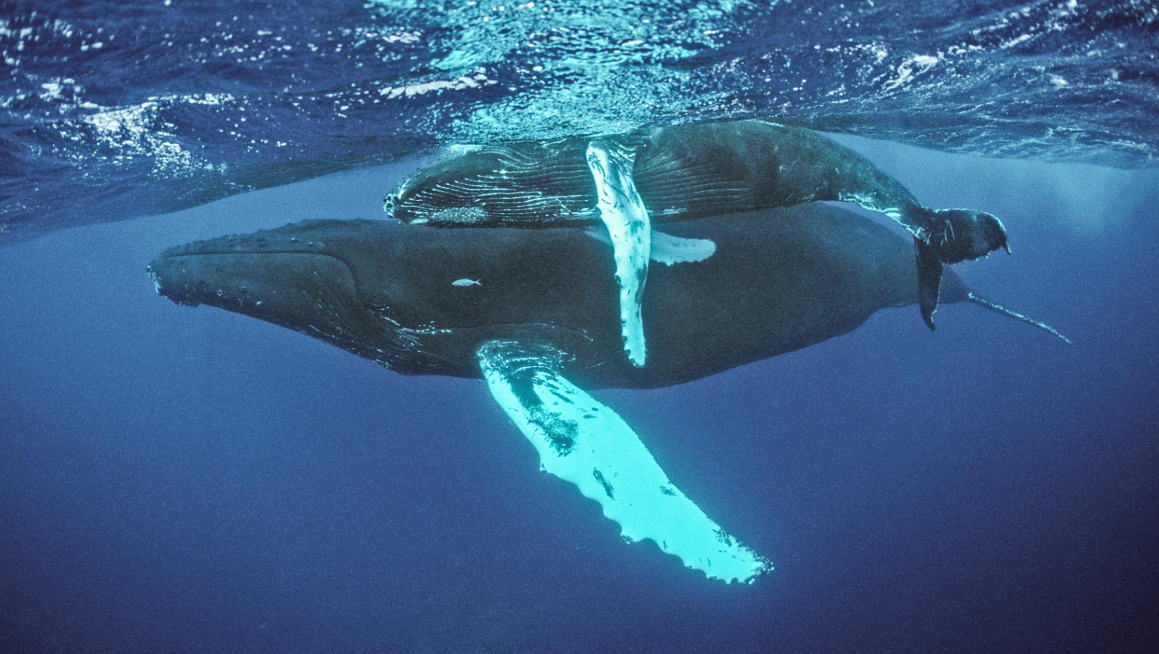
A whale can be nearby without being detected. Humpback whales spend time underwater, and their surfacing patterns can make them difficult to locate consistently.
Detectability may depend on several factors:
- Sea state and wave height
- Sunlight, glare, and visibility
- The length of time spent searching
- The distance between observers and whales
- Whale diving and surfacing behavior
- The location and route of the survey
- The experience and methods of the observers
These factors can affect the number of sightings even when the actual number of whales has not changed.
1. Scientists Record Survey Effort
One of the first ways to distinguish abundance from detectability is to document how much searching took place.
Researchers may record the number of survey hours, the distance traveled, the routes covered, and the conditions under which observations were made.
Consider two hypothetical surveys in Samaná Bay.
During the first survey, researchers spend two hours observing the water and record six whale encounters. During the second, they spend four hours searching and record eight encounters.
The second survey has more recorded encounters, but it also involved twice as much observation time. The raw totals alone do not establish that whale abundance increased.
Researchers can compare encounter rates or use statistical methods that account for survey effort. Even then, an encounter rate is not automatically a measure of population size, because repeat sightings and differences in detectability may remain.
2. Researchers Consider Weather and Sea Conditions
Weather can change how easily whales are spotted.
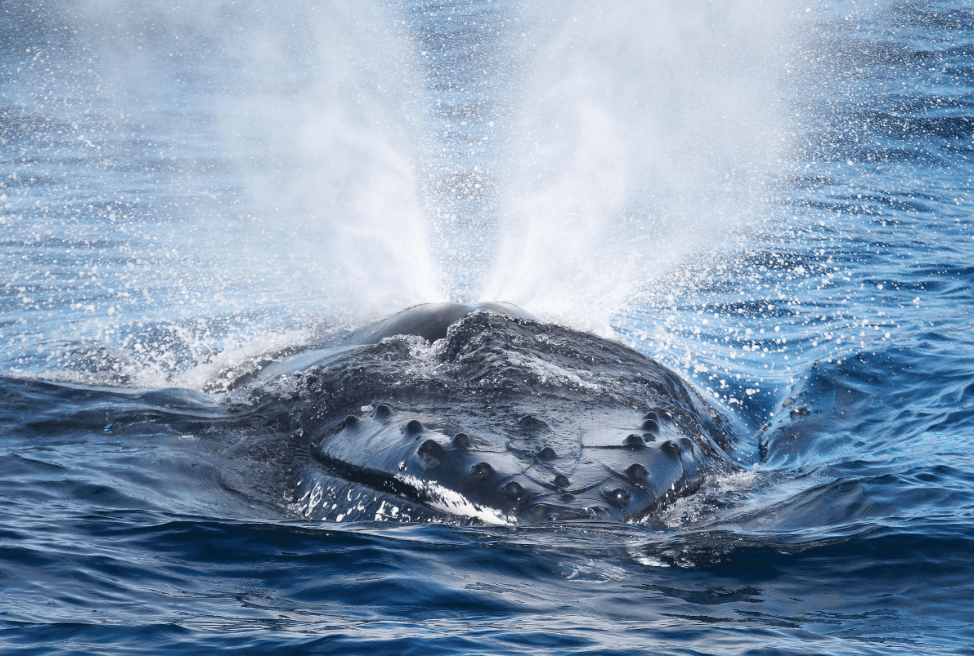
On a calm day, an observer may notice a whale's blow, back, or tail at a considerable distance. When waves are high, whitecaps and moving water can make those features harder to distinguish.
Bright sunlight and reflections may also obscure the surface. Haze or rain can reduce visibility, while rough conditions can restrict where a research vessel can safely operate.
Scientists document these conditions so that differences between surveys can be interpreted in context.
If fewer whales are recorded during a period of poor visibility, researchers should investigate whether detection became more difficult before concluding that fewer whales were present.
3. Scientists Account for Time Spent Underwater
Humpback whales do not remain at the surface continuously.
A whale may surface, breathe, and then dive for several minutes or longer, depending on its activity. During that underwater period, observers may lose sight of it even if it remains within the survey area.
Consequently, two surveys can produce different sighting totals simply because whales were available to be seen for different amounts of time.
Researchers may use repeated observations, information about surfacing behavior, or statistical models to account for imperfect detection.
The appropriate method depends on the available data. Scientists cannot reliably calculate the number of unseen whales from a single observation without additional assumptions or supporting information.
4. Researchers Use Repeat Surveys
Repeated surveys can help reveal whether an observation is unusual or part of a broader pattern.
For example, researchers might survey comparable locations on multiple days under documented conditions. If sightings remain low across repeated surveys, the evidence may be more informative than a single low-count observation.
However, repeat surveys are most useful when their design is suitable for the question being investigated.
Scientists must consider whether whales move into or out of the study area between surveys. If individuals are constantly entering and leaving, methods that assume a stable population may not be appropriate.
Repeated surveys improve the evidence available, but they do not automatically eliminate every source of uncertainty.
5. Scientists Compare Detection Methods
Different observation methods can reveal different aspects of whale activity.
Depending on the project, researchers may use visual surveys, photo-identification, acoustic monitoring, or a combination of methods.
Visual surveys record whales that observers can see from a vessel or another observation point. Results are affected by sea conditions, viewing distance, and surfacing behavior.
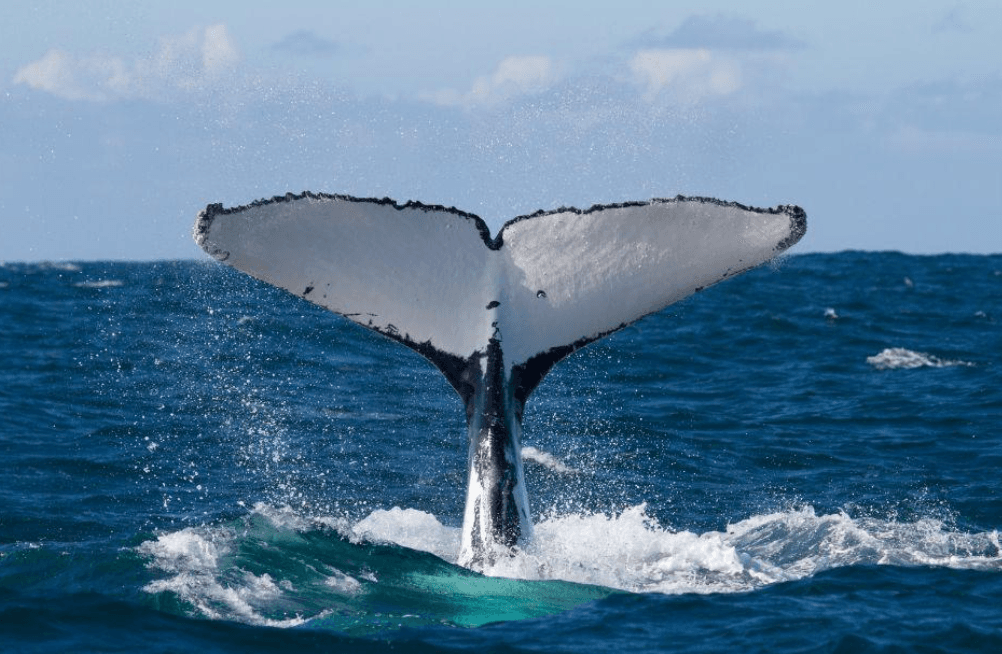
Photo-identification uses distinctive visible markings, especially patterns on the underside of tail flukes, to help recognize individual whales. Successful identification depends on obtaining sufficiently clear photographs.
Acoustic monitoring can detect sounds produced by whales when suitable equipment and recording conditions are available. However, hearing whale sounds does not necessarily reveal the exact number of whales present, because one individual may vocalize repeatedly and some whales may remain silent.
Combining complementary methods can improve understanding, but each method has its own limitations.
6. Photo-Identification Helps Separate Individuals From Encounters
One whale may be observed several times during the same day or breeding season.
Without individual identification, those encounters could be mistakenly treated as separate animals. Photo-identification helps researchers determine whether certain sightings belong to a whale already documented.
Scientists compare distinctive markings and other visible characteristics against existing catalogs. Unclear photographs may remain unmatched, and not every individual can be identified.
These records can help researchers understand how frequently known whales are encountered and whether identified individuals return in later years.
However, photo-identification alone may not reveal every whale present. An animal that is never photographed clearly may remain unidentified, which means the resulting catalog can be incomplete.
7. Researchers Use Statistical Models to Estimate Unseen Whales
In many wildlife studies, scientists use statistical methods to account for animals that were present but not observed.
Depending on the study design, approaches may include distance sampling, mark-recapture methods, occupancy models, or other models that explicitly address imperfect detection.
Each method has different data requirements and assumptions.
For example, distance sampling can use the distances between observers and detected animals to model how detection changes with distance. Mark-recapture methods can use repeated identification of individuals to estimate population size under appropriate assumptions.
The goal is to distinguish the observation process from the biological process researchers want to measure.
These models do not make uncertainty disappear. Their results depend on survey design, data quality, and whether their assumptions are reasonable for the whale population and study area.
8. Scientists Check Whether Survey Coverage Has Changed
A decline in sightings can occur when researchers search a smaller area or change their usual survey routes.
Imagine that one year a research team covers several sections of a bay, while the next year it spends most of its time in just one section. A difference in the resulting totals may reflect the change in coverage rather than a change in whale abundance.
To address this problem, scientists record where and when surveys occur.
They may compare only similar routes, account for the amount of coverage, or use spatial models where sufficient data are available.
Consistent survey design makes long-term comparisons more informative. When methods change, researchers need to document those changes and consider their effects on the results.
9. Why More Sightings Do Not Always Mean More Whales
A season with many whale encounters may have had more whales present, better observation conditions, greater survey effort, or some combination of these factors.
Likewise, fewer sightings do not necessarily indicate a population decline.
The same principle applies to whale-watching trips. A boat that encounters several whales in one outing and very few on another has observed two different sets of conditions. Those trips alone cannot establish whether the regional whale population has increased or decreased.
Scientists look for consistent evidence across appropriate surveys and use methods that address repeat encounters and imperfect detection before making population-level conclusions.
10. Why This Distinction Matters for Samaná Bay Conservation
Reliable estimates of whale abundance can support conservation planning and long-term monitoring. But misleading conclusions can arise if changes in visibility or survey effort are mistaken for changes in population size.
Understanding detectability helps scientists interpret their findings more carefully.
It can also reveal where monitoring needs improvement. Researchers might need more consistent survey routes, better records of sea conditions, additional identification photographs, or complementary observation methods.
For Samaná Bay, where humpback whales attract both scientific interest and responsible wildlife tourism, sound interpretation of sightings can contribute to a more accurate understanding of whale activity.
Visitors can help support responsible observation by following guide instructions, respecting wildlife-viewing distances, and avoiding attempts to chase or disturb whales for photographs.
What Whale Watchers Can Learn
Visitors often judge a trip by how many whales they see. However, a wildlife encounter is influenced by many factors beyond the number of animals in the area.
A quiet trip does not necessarily mean that whales are absent. A busy trip does not necessarily indicate a larger population.
The sea conditions, the whales' underwater movements, the observation route, and the duration of the trip all influence what visitors experience.
Understanding these limitations makes whale watching more rewarding because it encourages respect for the unpredictable nature of wildlife rather than expectations of guaranteed sightings.
Frequently Asked Questions
Does a decline in whale sightings mean the population is shrinking?
No. A decline in sightings may reflect fewer whales, lower detectability, reduced survey effort, or other factors. Scientists need suitable data and methods to distinguish these explanations.
How do researchers count whales that remain underwater?
Researchers may use repeated surveys, photo-identification, suitable statistical models, or complementary observation methods. The appropriate approach depends on the study design and the information available.
Can calm weather increase recorded whale sightings?
Calm conditions can make some whales easier to observe by reducing surface disturbance. However, the actual effect depends on visibility, whale behavior, survey coverage, and other conditions.
Can whale sounds tell scientists how many whales are present?
Acoustic recordings can provide valuable information about whale vocal activity, but sound detections do not directly equal individual whale counts. Researchers need additional information to interpret the number and identity of animals producing the sounds.
What is the difference between a whale encounter rate and whale abundance?
An encounter rate describes how frequently encounters occur relative to a measure such as survey time or distance traveled. Abundance refers to the number of animals in a defined population or area. Encounter rates can help monitor patterns, but they do not directly measure abundance without suitable assumptions and methods.
Why are long-term whale records important?
Long-term records allow scientists to examine recurring patterns, investigate unusual observations, and evaluate possible changes while accounting for variation in survey methods and detection conditions.
Conclusion
Distinguishing whale abundance from detectability is essential for interpreting humpback whale sightings in Samaná Bay.
Scientists document survey effort, evaluate weather and visibility, account for underwater behavior, compare repeat observations, and use appropriate statistical methods to estimate the animals that may have gone undetected.
The central lesson is that recorded sightings represent what observers managed to detect, not necessarily every whale that was present. By separating these two concepts, researchers can draw more reliable conclusions and strengthen the scientific foundation for whale monitoring and conservation.

Local explorer & expert guide in Samaná Bay Whale Watching.